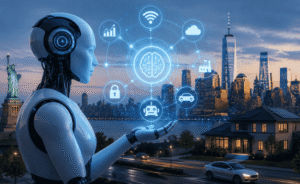
A few years ago, the idea of a home adjusting the temperature before you arrived or turning off forgotten lights seemed futuristic. Today, those features are becoming part of everyday life. Smart home technology has moved beyond novelty gadgets and become a practical way to make daily routines smoother, more efficient, and less time-consuming.
Many people don’t realize how much time they spend on small household tasks until technology starts handling them automatically. From managing energy consumption to improving home security, connected devices are changing the way people interact with their living spaces. The result is a home that works in the background, helping residents stay comfortable while reducing unnecessary effort and waste.
What Makes a Home Smart Today?

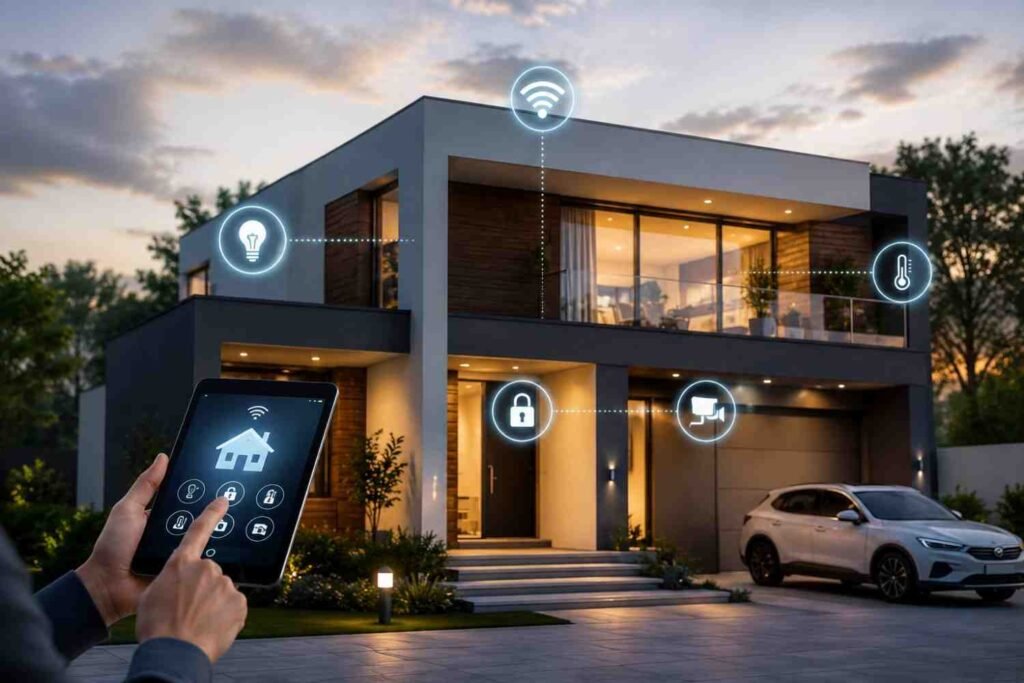
A smart home uses connected devices, sensors, and software to automate tasks that would otherwise require manual control. These devices communicate through wireless networks and can often be managed through a smartphone, voice assistant, or central hub.
Unlike traditional appliances, smart home devices can respond to real-time conditions. A thermostat can adjust based on occupancy, lights can react to natural daylight, and security systems can send instant alerts when unusual activity is detected.
The real advantage comes from creating a connected ecosystem where multiple devices work together rather than operating independently. This coordinated approach improves convenience while making the home more energy-efficient.
How Smart Technology Saves Time Every Day
One of the biggest reasons homeowners invest in smart home technology is the amount of time it can save.
Automating Repetitive Tasks
Daily routines often involve dozens of small actions that quickly add up. Turning off lights, adjusting thermostats, checking locks, and managing appliances may seem minor, but they consume attention throughout the day.
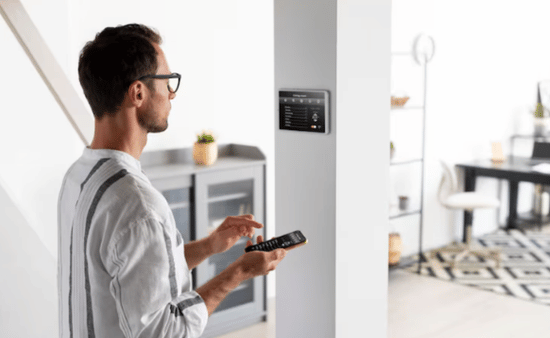
Automation eliminates much of this effort. A single routine can turn off lights, lock doors, activate security systems, and adjust climate controls before bedtime. Morning routines can gradually brighten lights, start the coffee maker, and set comfortable temperatures before anyone gets out of bed.
Robot vacuums provide another practical example. Instead of setting aside time for floor cleaning, homeowners can schedule cleaning sessions that happen automatically.
Managing Your Home From Anywhere
Remote access has become one of the most useful features of connected home systems.
Whether you’re at work or traveling, you can check security cameras, adjust thermostats, unlock doors for deliveries, or monitor appliances through a mobile app. This level of control reduces unnecessary trips home and provides peace of mind when you’re away.
Smart appliances contribute as well. Ovens can preheat before you arrive home, and laundry machines can notify you when a cycle is complete. These small conveniences help households operate more efficiently throughout the day.
How Smart Homes Help Reduce Energy Use
Beyond convenience, energy efficiency has become a major driver behind the growth of home automation.
Smarter Heating and Cooling
Heating and cooling systems account for a significant portion of household energy consumption. Smart thermostats address this issue by learning occupancy patterns and adjusting temperatures automatically.
Instead of heating or cooling empty rooms, the system responds to actual usage. Some devices even use geofencing technology to detect when residents leave or approach home, making temperature adjustments without requiring manual input.
Over time, these adjustments can contribute to lower utility bills while maintaining comfort.
Intelligent Lighting and Power Management
Lighting systems have evolved far beyond simple timers. Modern smart lighting uses motion detection, occupancy sensors, and scheduling features to ensure lights operate only when needed.
LED smart bulbs can dim automatically during daylight hours and switch off when rooms are vacant. Smart plugs further reduce energy waste by cutting power to electronics that continue drawing electricity while idle.
Water-saving technologies also play a growing role. Smart leak detectors can identify unusual water usage and automatically shut off the main water supply before major damage occurs.
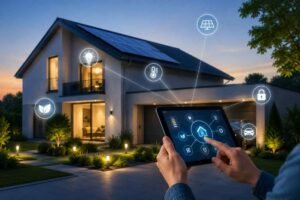
For homeowners with solar panels, automation systems can schedule energy-intensive tasks during peak solar production hours, maximizing renewable energy usage and reducing dependence on the grid.
The Smart Devices Making the Biggest Difference
Several categories of smart home devices consistently deliver measurable benefits:
- Smart thermostats that optimize climate control and energy management
- Smart lighting systems that adapt to occupancy and daylight conditions
- Security cameras and smart locks that improve home protection
- Smart plugs that eliminate phantom energy usage
- Robot vacuums that automate routine cleaning
- Leak detection systems that prevent costly water damage
These technologies provide immediate practical value while creating opportunities for broader automation throughout the home.
Why Connected Systems Work Better Than Standalone Gadgets
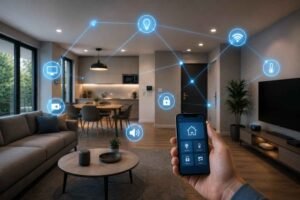
The true power of smart home technology emerges when devices work together.
A connected ecosystem allows different systems to respond automatically to changing conditions. For example, when occupants leave home, the security system can arm itself, lights can turn off, and climate settings can shift into energy-saving mode simultaneously.
This interconnected approach reduces the need for constant management and creates a more responsive living environment.
Interestingly, these advancements reflect a broader shift in consumer technology. As developers explore smart wearable experiences, many experts expect future smart home experiences to rely less on screens and more on ambient computing, voice interaction, sensors, and artificial intelligence operating quietly in the background.
As smart home ecosystems continue to evolve, the focus is increasingly moving toward technology that anticipates needs rather than waiting for commands.
Frequently Asked Questions: How Technology Makes Homes Smarter While Saving Time and Energy
1. What is the biggest benefit of a smart home?
The biggest benefit is automation. Smart homes reduce the need for manual tasks while improving convenience, energy efficiency, and security.
2. Do smart homes actually save energy?
Yes. Smart thermostats, lighting systems, and energy management tools can significantly reduce unnecessary energy consumption by responding to occupancy and usage patterns.
3. Are smart home devices difficult to install?
Many modern smart home devices are designed for simple installation and can be set up without professional assistance. More advanced systems may require expert installation.
4. Can smart home technology work without internet access?
Some functions may continue operating locally, but many advanced features, such as remote monitoring, cloud-based automation, and app controls, typically require an internet connection.
Why Smarter Living Is Becoming the New Normal
The growing popularity of smart home technology isn’t simply about owning the latest gadgets. People are increasingly looking for ways to simplify daily life, reduce energy waste, and create living spaces that adapt to their needs. Smart homes address all of these priorities by combining automation, connectivity, and intelligent decision-making into systems that work quietly behind the scenes. What once felt futuristic has become a practical solution for modern households seeking greater efficiency and convenience.
As technology continues to evolve, homes won’t just respond to commands—they’ll become better at anticipating needs and supporting everyday life with less effort from the people living inside them.