Not long ago, carrying a smartphone felt futuristic. Today, it’s second nature. We check notifications while waiting in line, navigate unfamiliar streets, pay for coffee, and manage entire workdays through a device that rarely leaves our hands.
Yet something interesting is happening across the technology industry. Many of the biggest innovations are no longer focused on making smartphones larger, faster, or thinner. Instead, companies are investing heavily in technologies that may replace smartphones by moving digital experiences beyond the screen and into our everyday environment.
The goal isn’t simply creating a better phone. It’s creating a world where technology feels more natural, seamless, and almost invisible.
Why People Are Questioning the Future of Smartphones
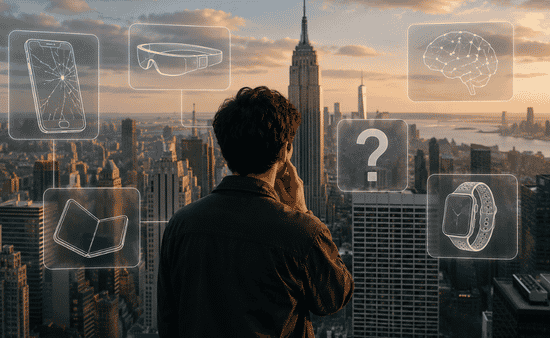
Smartphones remain incredibly powerful, but they’ve reached a point of maturity. Each new generation offers incremental improvements rather than transformative changes. At the same time, consumer technology trends are shifting toward hands-free interaction, personalized experiences, and AI assistants that understand context rather than waiting for commands.
This shift has opened the door for new forms of human-computer interaction. Instead of staring at a screen, future technology may allow people to access information through voice commands, wearable technology, or even direct neural connections.
The result is a growing belief that smartphones may eventually become background devices rather than the center of our digital lives.
AI Wearables May Become Personal Digital Companions
Artificial intelligence is changing the conversation around consumer electronics.
Instead of opening apps, future devices may allow users to speak naturally and let intelligent assistants handle tasks behind the scenes. This concept is driving the rise of AI wearables, including smart pins, pendants, earbuds, and connected accessories.
These devices focus on context awareness. Rather than waiting for instructions, they can interpret your surroundings, understand routines, and provide assistance when needed.
For example, an AI assistant could summarize meetings, schedule appointments, answer questions, and manage digital communication without requiring multiple apps or menus.
Many technology companies believe the future of mobile technology will revolve around conversations rather than screens. If that prediction proves accurate, AI-first hardware could significantly reduce dependence on smartphones.
Spatial Computing Is Expanding Beyond Traditional Screens
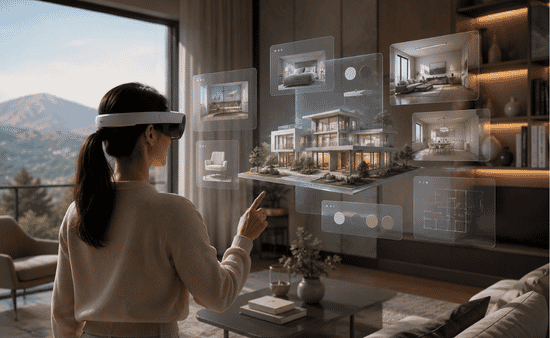
Spatial computing combines the physical and digital worlds in ways that traditional devices cannot.
Instead of interacting through flat displays, users engage with digital content that exists around them. Virtual workspaces, immersive experiences, interactive learning environments, and collaborative digital tools all become part of the surrounding environment.
This technology has major implications for industries such as education, healthcare, engineering, and entertainment. Professionals could manipulate complex data in three-dimensional space, while consumers enjoy more engaging forms of media consumption.
As hardware becomes lighter and more accessible, spatial computing may become a standard part of everyday life rather than a niche technology.
Brain-Computer Interfaces Are Advancing Faster Than Expected
Few innovations sound as futuristic as brain-computer interfaces, yet active development is already underway.
BCIs create a direct connection between the human brain and digital systems. Instead of typing, tapping, or speaking, users can control devices through neural signals.
The potential applications are enormous. People could communicate, browse information, or interact with software using thought-based commands. For individuals with mobility challenges, these systems could offer life-changing accessibility benefits.
However, widespread adoption faces significant challenges. Privacy concerns, regulatory oversight, long-term safety considerations, and consumer comfort all remain major questions.
Even so, brain-computer interfaces represent one of the boldest examples of emerging technologies reshaping human-computer interaction.
Ambient Computing and Connected Devices Could Reduce Screen Dependence
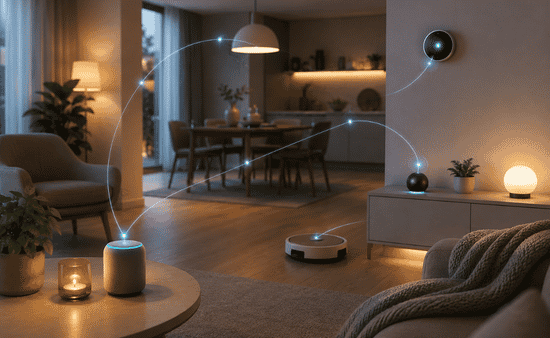
One of the most important shifts isn’t a single device at all. It’s the rise of ambient computing.
Ambient computing refers to smart ecosystems where connected devices work together continuously in the background. Instead of requiring constant interaction, technology becomes embedded within everyday environments.
This reflects how technology is becoming more invisible. Rather than demanding attention through screens, future systems may quietly provide real-time information, automate routine tasks, and respond naturally to voice, movement, and context.
Smart homes already offer a glimpse of this future. Lighting, security, entertainment, and climate controls can communicate across multiple devices. As machine learning improves, these systems will become more personalized and proactive.
In this model, smartphones may still exist, but they would function primarily as processing hubs while most interactions occur elsewhere.
What Stands in the Way of Replacing Smartphones?
Despite rapid innovation, several obstacles remain.
First, smartphones are incredibly convenient. They combine communication, entertainment, productivity, navigation, payments, and photography into a single device.
Second, privacy concerns continue to grow. Many next-generation devices rely on continuous data collection, environmental awareness, and biometric technology. Consumers will need reassurance that their information remains secure.
Cost also plays a role. Advanced wearable technology and augmented reality devices remain expensive compared to traditional smartphones.
Finally, habits are difficult to change. People have spent nearly two decades adapting to touchscreen-based experiences. Any replacement must offer a dramatically better experience to encourage widespread adoption.
Will Smartphones Disappear or Simply Evolve?
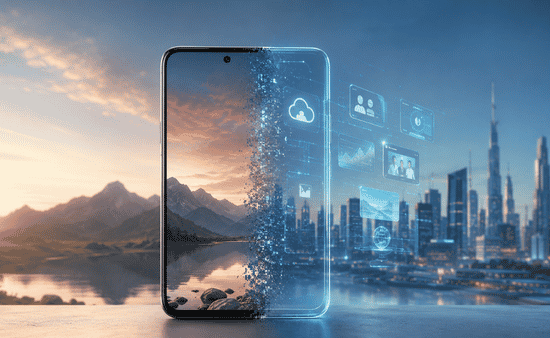
The most likely outcome isn’t a sudden replacement.
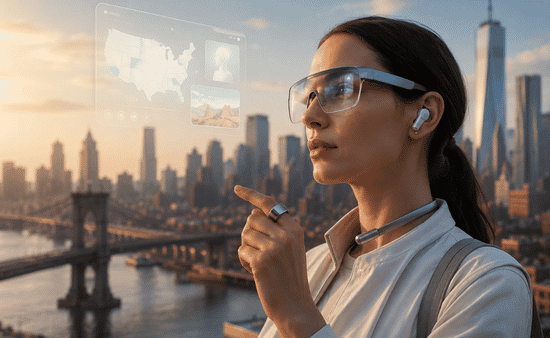
Instead, smartphones may gradually become less visible as connected devices take over specific functions. Smart glasses may handle navigation, AI wearables may manage communication, and ambient computing systems may automate routine tasks.
Over time, the smartphone could transition from a primary interface into a supporting device that powers a broader ecosystem of connected experiences.
Frequently Asked Questions: The Most Promising Technologies That May Replace Smartphones in the Next Decade
What are the leading technologies that may replace smartphones?
Smart glasses, AI wearables, brain-computer interfaces, ambient computing systems, and advanced augmented reality devices are among the strongest candidates.
Will smartphones disappear completely?
Probably not in the near future. Most experts expect smartphones to evolve into supporting devices while other technologies handle everyday interactions.
How do AI wearables differ from smartphones?
AI wearables focus on voice-first interaction, context awareness, and proactive assistance rather than relying on apps and touchscreens.
Are brain-computer interfaces available today?
Early versions exist and are being tested in specialized environments. However, mainstream consumer adoption is still years away.
Why the Next Big Device Might Not Look Like a Device at All
For decades, technology has followed a familiar pattern. We carried bigger computers in smaller packages until the smartphone became the center of everything. The next wave appears to be moving in the opposite direction. Instead of asking people to spend more time looking at screens, innovators are building systems that blend into daily life. Smart glasses, AI assistants, wearable technology, and ambient computing all point toward a future where digital experiences happen around us rather than through a single handheld device.
The technologies that may replace smartphones aren’t trying to create another screen. They’re trying to make the screen disappear.