A lot of major technology shifts don’t feel revolutionary at first. They arrive quietly, tucked inside products and services people already use. Then, almost overnight, they become impossible to ignore. The internet followed that pattern. Smartphones did too. Artificial intelligence appears to be taking a similar path, but this time the transformation is happening much faster.
What’s different about the current moment is that technology is no longer evolving as a collection of separate tools. Instead, we’re seeing the rise of intelligent systems that can learn, adapt, communicate, and act with minimal human involvement.
Understanding the next wave of technology explained isn’t just about following trends. It’s about recognizing how emerging technologies are reshaping work, communication, and everyday experiences.
What the Next Wave of Technology Actually Means
When people think about future technology trends, they often focus on a single breakthrough. In reality, the next wave of innovation is being driven by multiple technologies working together.
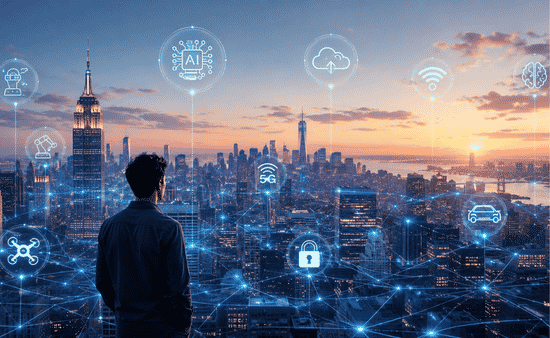
Artificial intelligence, connected devices, edge computing, advanced automation, and spatial computing are forming interconnected digital ecosystems. These systems can process real-time data, make decisions, and continuously improve their performance.
The shift is moving technology from being reactive to becoming proactive. Instead of waiting for instructions, modern systems increasingly anticipate needs, identify patterns, and recommend actions before users even ask.
The Rise of AI Agents
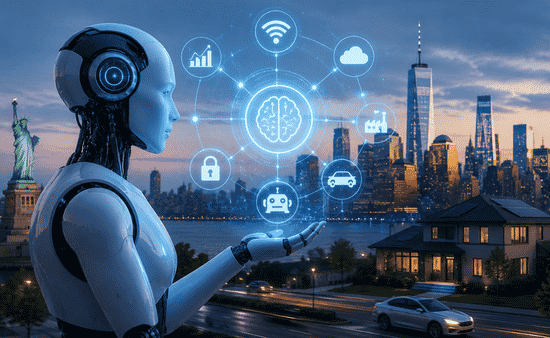
Artificial intelligence has already changed how people search for information, create content, and automate repetitive tasks. AI agents represent the next step in that evolution.
How AI Agents Differ From Traditional AI Tools
Most AI tools today respond to prompts. They answer questions, generate text, or provide recommendations when asked.
AI agents work differently. They focus on objectives rather than individual tasks. A user provides a goal, and the system determines how to achieve it.
These intelligent systems can:
- Break large goals into smaller tasks
- Use multiple software tools independently
- Browse websites and gather information
- Evaluate outcomes and adjust their approach
- Complete multi-step workflows with limited supervision
This makes AI agents closer to autonomous systems than traditional digital assistants.
Where AI Agents Are Already Appearing
Businesses are beginning to deploy AI agents for customer support, research, software development, scheduling, and workflow automation.
Imagine planning a vacation. Instead of comparing flights, hotels, and transportation manually, an AI agent could organize the entire itinerary based on your budget, calendar availability, and preferences. The user focuses on the destination while the technology handles the logistics.
Agentic Workflows Are Changing Productivity
One of the most interesting developments isn’t a single AI system doing everything. It’s multiple AI agents working together.
This approach is known as agentic workflows.
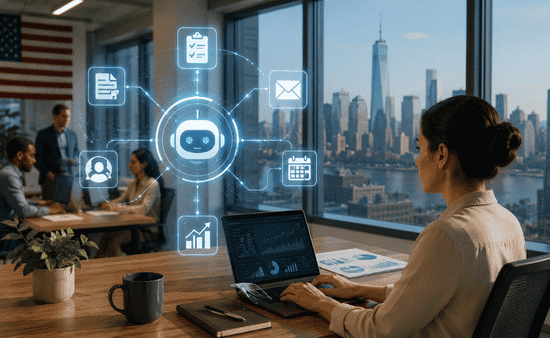
Rather than relying on one model to complete a complex project, organizations are assigning specialized roles to different AI systems. One agent may act as a researcher. Another serves as a writer. A third functions as an editor or quality reviewer.
This layered process offers several advantages:
- Better accuracy through multiple review stages
- Improved problem-solving capabilities
- Faster execution of complex projects
- Reduced hallucinations and factual mistakes
The result is a more reliable form of intelligent automation that can support knowledge work at scale.
Why Smarter Connected Systems Matter
The Internet of Things has connected billions of devices over the past decade. The next phase goes beyond connectivity alone.
Smart systems are becoming capable of analyzing information and acting on it without waiting for cloud-based instructions.
The Growth of Connected Devices
Connected devices now exist in homes, offices, hospitals, factories, and transportation networks. Sensors continuously collect information about usage patterns, environmental conditions, and system performance.
The difference today is that many devices are gaining built-in intelligence.
Instead of simply sending data elsewhere for analysis, they can interpret information directly and make decisions in real time.
Real-Time Decisions Through Edge Computing
Edge computing plays a major role in this transformation.
Rather than sending data to distant servers, processing happens closer to where information is generated. This reduces delays and improves responsiveness.
In manufacturing environments, predictive maintenance systems can identify signs of equipment failure before a breakdown occurs. In logistics facilities, autonomous carts and drones coordinate inventory movement without constant human oversight.
These advances are creating smarter infrastructure capable of adapting as conditions change.
Technologies Powering the Next Wave

Several emerging technologies are working together to create this new landscape:
- AI agents and machine learning systems
- Edge computing platforms
- Intelligent connected devices
- Digital twins for simulation and analysis
- Advanced robotics and automation
- Spatial computing and augmented reality
- Cybersecurity powered by predictive analytics
Each technology is important on its own, but their combined impact is what makes this wave different from previous periods of technology innovation.
How Everyday Life Is Changing
The effects of these developments extend far beyond corporate environments.
Healthcare providers are using AI-powered systems to support diagnosis and patient monitoring. Educational platforms are adapting lessons based on individual learning patterns. Transportation networks are becoming more efficient through intelligent traffic management and connected infrastructure.
Consumers are also seeing technology become less visible and more integrated into daily activities. Smart environments can adjust lighting, temperature, and entertainment preferences based on context and behavior. Voice interactions are replacing many traditional screen-based actions.
As these systems become more common, tech powered daily routines will feel increasingly natural rather than futuristic.
Spatial computing is also contributing to this shift. Engineers can use augmented reality overlays to view real-time operational data directly on physical equipment. Similar experiences are gradually moving into consumer applications, retail environments, and workplace collaboration tools.
Frequently Asked Questions: Next Wave of Technology Explained: From AI Agents to Smarter Connected Systems
What are AI agents?
AI agents are intelligent systems designed to pursue goals independently. They can perform multi-step tasks, use software tools, gather information, and adjust their actions based on results.
How are AI agents different from chatbots?
Traditional chatbots respond to individual prompts. AI agents can plan, execute, and manage entire workflows with limited human involvement.
What is edge computing?
Edge computing processes data closer to where it is created rather than sending everything to centralized cloud servers. This improves speed, efficiency, and real-time responsiveness.
What industries will benefit most from smarter connected systems?
Healthcare, manufacturing, logistics, transportation, education, retail, and smart city infrastructure are among the sectors expected to see significant benefits.
Why the Biggest Changes May Feel Surprisingly Ordinary
The technologies attracting headlines today are impressive, but their long-term impact may come from something much simpler. The most successful innovations often disappear into the background.
People stop noticing the technology itself and focus instead on the convenience, efficiency, and experiences it creates. AI agents, connected systems, and ambient intelligence are all moving in that direction. The goal isn’t to make technology more visible. It’s to make it more useful.
The next wave won’t arrive all at once. In many ways, it’s already here.