Flying for the first time can feel exciting, confusing, and stressful all at once. I believe the easiest way to handle an airport is to stop seeing it as one big challenge and follow it as a clear sequence.
These airport tips for first time travelers explain what to do before you leave home, how check-in works, what happens at TSA security, how to find your gate, and what to expect before boarding.
What Should You Do Before Leaving for the Airport?
Start with online check-in. Most airlines open web or app check-in about 24 hours before departure, and I recommend using it whenever possible. It lets you confirm your seat, review flight details, and download a digital boarding pass.
Next, check your airline’s baggage rules. US airlines set their own carry-on size, personal item size, checked bag weight, and fee policies, so do not rely on one universal limit. Pack smart.
Keep your ID, passport if needed, phone, wallet, medications, keys, laptop, power bank, chargers, and travel documents in your personal bag. Do not place these items in checked luggage.
TSA’s 3-1-1 liquid rule also matters, especially when you are checking liquid and gel rules before packing. Carry-on liquids, gels, aerosols, creams, and pastes should be in containers of 3.4 ounces or less and fit inside one quart-size clear bag.
I also suggest packing solid snacks, an empty reusable water bottle, headphones, and a light jacket because airplane cabins often feel cold.
How Early Should First-Time Flyers Arrive at the Airport?
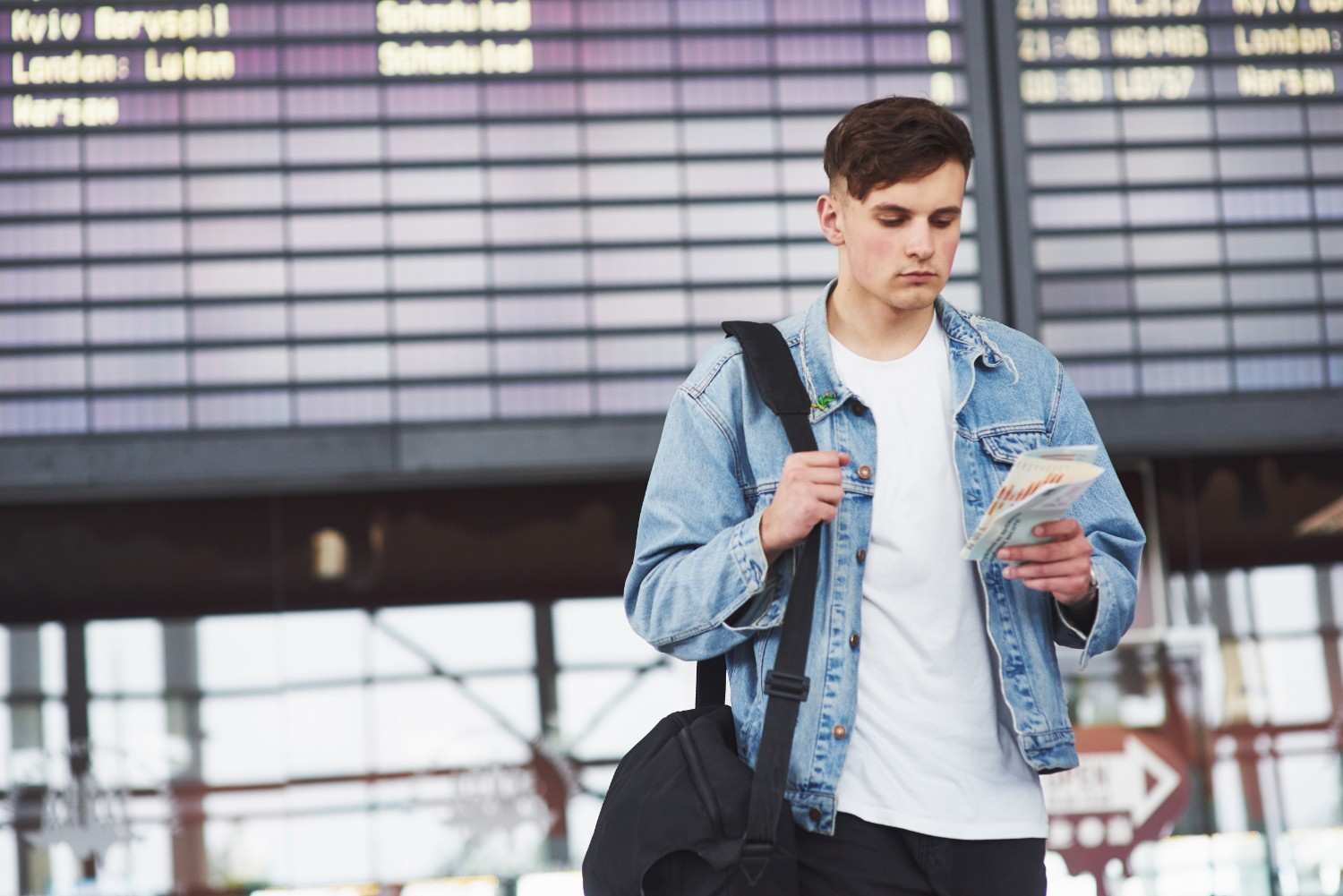
For domestic flights, arrive two hours before departure. For international flights, arrive three hours early. This gives you enough time to check bags, clear TSA, walk to the gate, and handle delays without panic.
Your departure time is not the same as your boarding time. Many flights board 30 to 45 minutes before takeoff, and aircraft doors can close before departure. Extra time is the easiest way to make the whole journey feel calm.
How Do You Find the Right Terminal and Check-In Area?
Before leaving, confirm your terminal in the airline app, email confirmation, or airport website. Large US airports can have multiple terminals, and the wrong one can waste time.
Once inside, look for your airline’s signs, kiosks, or counter area. Keep your boarding pass and photo ID easy to reach. In the US, you usually show ID at the TSA checkpoint, not before entering the airport building. If you feel lost, ask airport staff or an information desk for help. Showing your boarding pass usually helps them guide you quickly.
What Happens at Check-In and Baggage Drop?
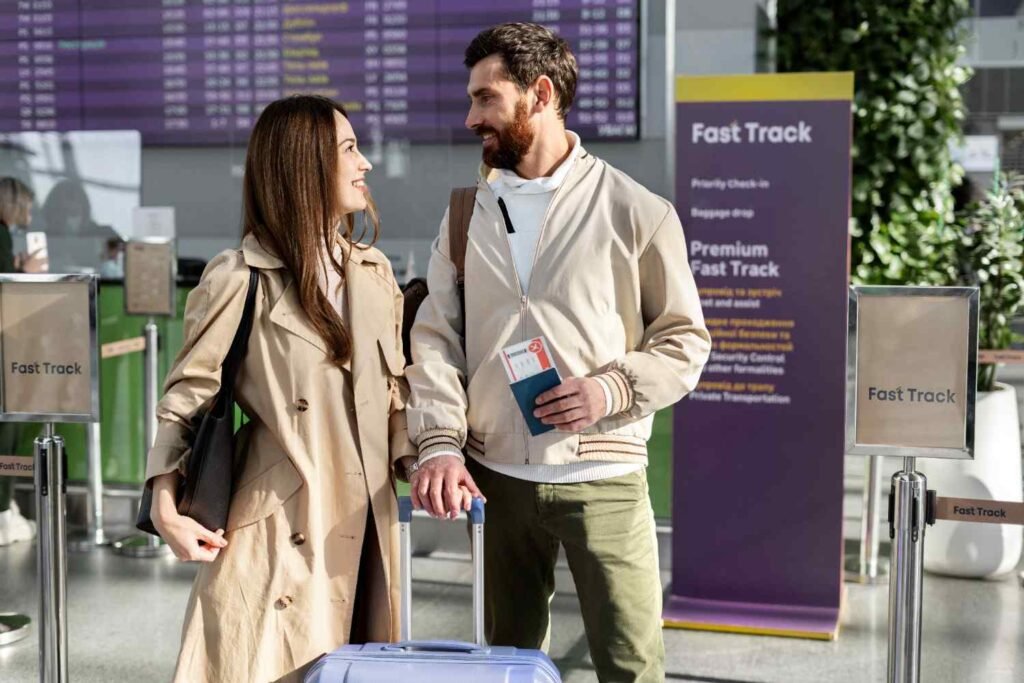
If you checked in online and only have a carry-on, go straight to TSA security. If you need to check a bag, go to your airline’s counter or bag drop area. Large screens may show flight numbers, airline zones, or counter rows.
At the counter, the agent may check your ID, weigh your bag, tag it to your destination, and print a boarding pass. Before your checked bag goes away, remove power banks, spare lithium batteries, laptops, medication, and important documents. Keeping essentials with you protects you if your checked bag gets delayed.
What Should You Expect at TSA Security?

TSA screening is simple when you prepare before reaching the trays. Empty your pockets, remove metal items, and keep your ID ready. Depending on the airport and lane type, you may need to remove your shoes, jacket, belt, laptop, tablet, and liquids bag.
Place items flat in the bin when instructed and wait for the officer to signal you through the scanner or metal detector. After screening, collect everything immediately, then move aside before reorganizing. This keeps the line moving and lowers the chance of leaving something behind.
What Should You Do After Passing Security?
Find your gate first. Do not head straight to restaurants, lounges, or duty-free shops before checking where your flight boards. Gate numbers can change, so compare your boarding pass with the airport departure screens and airline app.
Use the restroom, refill an empty water bottle, buy snacks, charge your phone, or grab food once you know where the gate is. Use your own wall charger instead of public USB ports when possible, and listen for announcements.
What Are the Best Pro Tips for a Smoother First Flight?
Dress for comfort. Slip-on shoes can make security easier, and a hoodie or light jacket helps because cabins often feel cold. Bring an empty reusable water bottle through security and refill it inside the terminal. Airport water can be expensive, and staying hydrated makes the flight feel better.
Download your airline app and screenshot your boarding pass before reaching the airport. Solid snacks are usually allowed through TSA, but liquid or gel foods over 3.4 ounces should go in checked luggage. These small habits make airport navigation easier for first-time flyers.
How Does Boarding Work for First-Time Travelers?
Boarding usually happens by group, zone, row, or seat type. Wait until your group is called, then scan your boarding pass. Once inside, find your row number and seat letter. Put your carry-on in the overhead bin and your personal item under the seat in front of you.
If you are unsure where to go or where to place your bag, ask a flight attendant. They help nervous travelers every day, so there is no need to feel embarrassed.
What Happens After Landing?
After landing, stay seated until the seat belt sign turns off. Take your belongings and follow signs to baggage claim, ground transportation, rideshare pickup, or connecting flights. If you followed TSA carry on rules for domestic flights before boarding, your personal bag should already have your essentials easy to reach.
If you checked a bag, look for your flight number on the baggage claim screen. If your luggage does not arrive, go to the airline baggage service desk before leaving the airport. Acting quickly makes the claim process easier.
FAQs About First-Time Airport Travel
1. What do I need for my first domestic flight?
You need a boarding pass and an acceptable ID, such as a REAL ID-compliant driver’s license or another TSA-approved identification document.
2. Can I bring food through airport security?
Solid food is usually allowed in carry-on bags, but liquid or gel foods over 3.4 ounces should go in checked baggage when possible.
3. Should I print my boarding pass?
A phone boarding pass is usually enough, but a screenshot or printed copy helps if your battery dies or the app fails.
4. What is the biggest mistake first-time flyers make?
The biggest mistake is arriving late because it creates stress during check-in, security, gate changes, and boarding.
Final Thoughts
Your first airport trip becomes easier when you understand each step. Check in early, pack carefully, arrive with extra time, clear TSA, find your gate first, and ask for help whenever you need it. With these airport tips for first time travelers, you can avoid common mistakes and start your journey with confidence.